Hi, and welcome to our art room! This site is dedicated to the awesome elementary artists I teach, and is a little window into our world of art. Hope you enjoy!
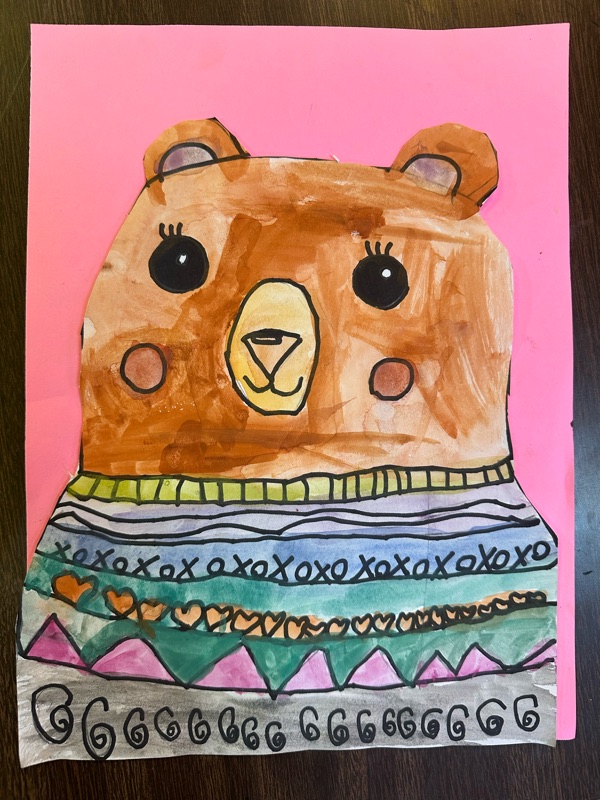
This week in the art room 2nd grade created these adorableBears in Sweaters, from PrimaryPicassos on Instagram, and the students absolutely loved it! This project was a great way to combine drawing, pattern design, and watercolor painting while practicing careful craftsmanship.
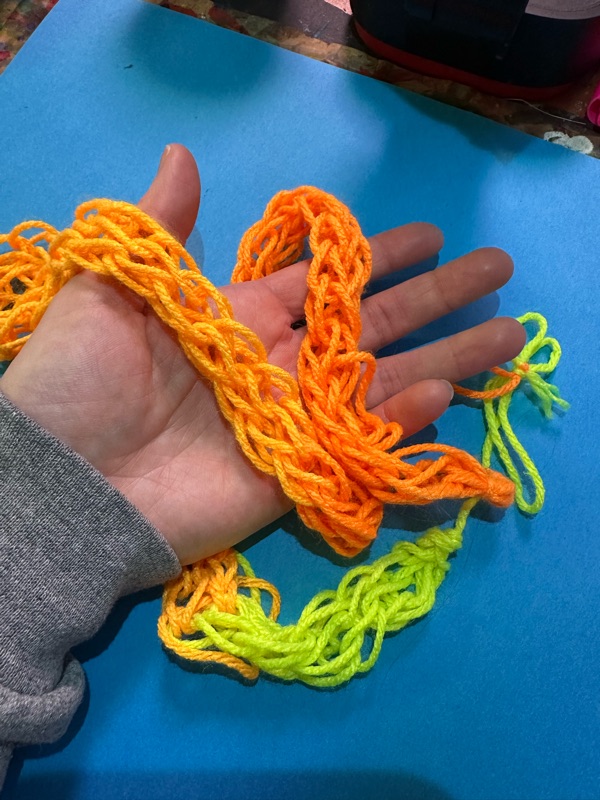
This week in art, our students explored finger weaving—a simple and exciting way to create colorful woven chains using just yarn and their hands! This hands-on activity helps students learn about patterns, coordination, and creativity while having fun with bright colors.
Finger weaving is a basic weaving technique where students use their fingers instead of tools or looms to weave yarn together. By looping and crossing strands of yarn, students can create long, colorful woven chains. Each chain becomes a unique piece of fiber art!
Students chose several colors of yarn and worked step-by-step to weave them together. As they practiced the pattern, they discovered how different color combinations created beautiful designs.
If you'd like to try finger weaving at home, you can follow the same steps we used in class. Watch the video below for a demonstration of the weaving process:
This week, 5th graders are exploring the world of fiber artby learning how to weave on a cardboard loom! This project introduces students to one of the oldest art techniques in the world while helping them practice patience, creativity, and craftsmanship.
What Is a Loom?
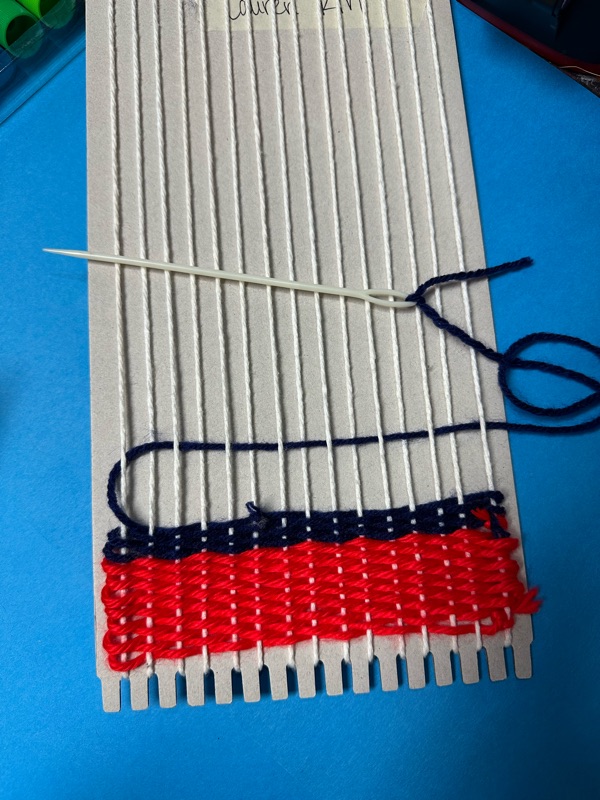
A loom is a tool used to hold yarn or thread in place while another piece of yarn is woven through it. For this project, students created their own simple looms using 6" × 13.5" pieces of cardboard. Small notches along the edges hold the vertical yarn strands, called the warp.
Once the warp yarn is in place, students begin weaving a second strand of yarn, called the weft, back and forth across the loom.
How Students Are Weaving
Students are creating their weaving on one side of the cardboard loom. They weave the yarn over and under the warp strings, switching the pattern on each row. As they continue this pattern, the yarn begins to build into a colorful woven design.