Powered By Blogger

Monday, March 9, 2026

Cozy Sweater Bears 2nd grade

This week in the art room 2nd grade created these adorable Bears in Sweaters, from PrimaryPicassos on Instagram, and the students absolutely loved it! This project was a great way to combine drawing, pattern design, and watercolor painting while practicing careful craftsmanship.


Step 1: Drawing the Bear- Click here for the drawing tutorial on YouTube

Finger Weaving!


This week in art, our students explored finger weaving—a simple and exciting way to create colorful woven chains using just yarn and their hands! This hands-on activity helps students learn about patterns, coordination, and creativity while having fun with bright colors.

What Is Finger Weaving?

Finger weaving is a basic weaving technique where students use their fingers instead of tools or looms to weave yarn together. By looping and crossing strands of yarn, students can create long, colorful woven chains. Each chain becomes a unique piece of fiber art!

Students chose several colors of yarn and worked step-by-step to weave them together. As they practiced the pattern, they discovered how different color combinations created beautiful designs.

Materials:

Skills We Practiced

While working on this project, students developed several important skills:

  • Fine motor skills through manipulating the yarn

  • Pattern recognition as they repeated the weaving sequence

  • Color planning by choosing yarn combinations

  • Patience and focus while building long woven chains

Many students were excited to see how long their woven chains could grow!

Watch the Instructions

If you'd like to try finger weaving at home, you can follow the same steps we used in class. Watch the video below for a demonstration of the weaving process:

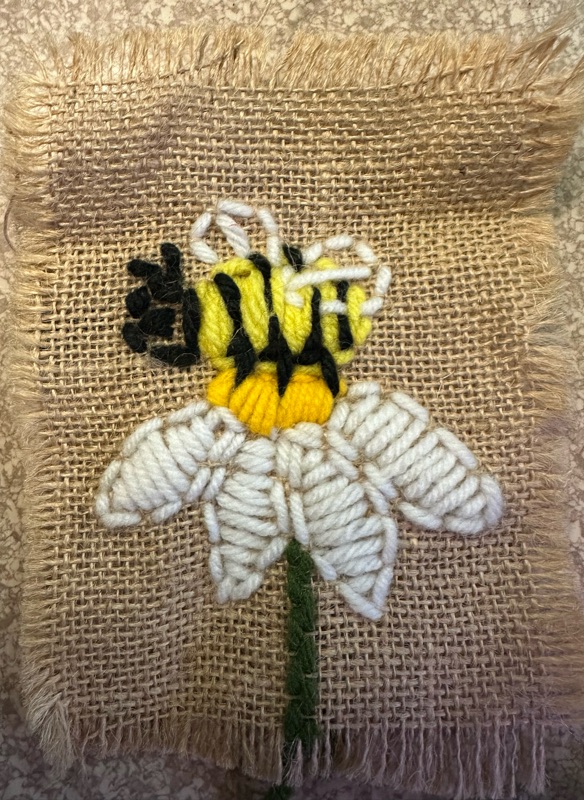
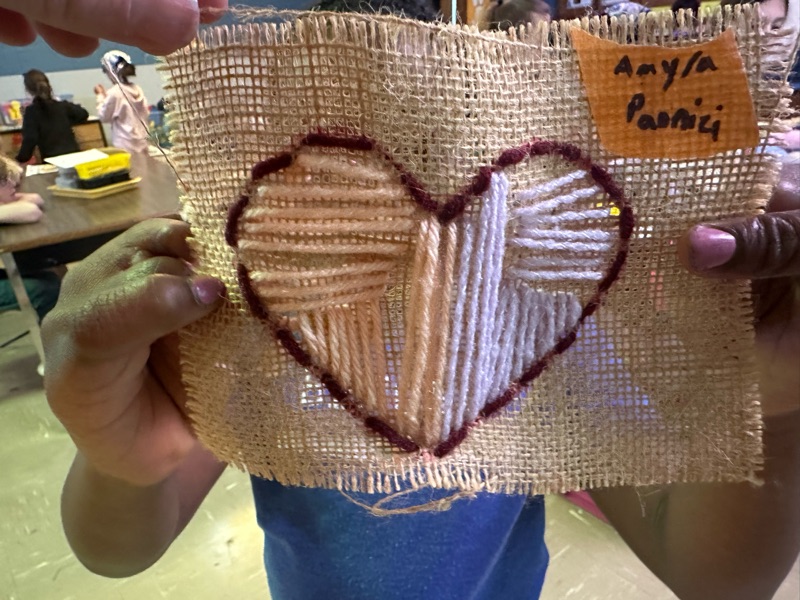
Weaving on a cardboard loom!

This week, 5th graders are exploring the world of fiber art by learning how to weave on a cardboard loom! This project introduces students to one of the oldest art techniques in the world while helping them practice patience, creativity, and craftsmanship.

What Is a Loom?

A loom is a tool used to hold yarn or thread in place while another piece of yarn is woven through it. For this project, students created their own simple looms using 6" × 13.5" pieces of cardboard. Small notches along the edges hold the vertical yarn strands, called the warp.

Once the warp yarn is in place, students begin weaving a second strand of yarn, called the weft, back and forth across the loom.

How Students Are Weaving

Students are creating their weaving on one side of the cardboard loom. They weave the yarn over and under the warp strings, switching the pattern on each row. As they continue this pattern, the yarn begins to build into a colorful woven design.

Students can:

  • Choose different yarn colors

  • Create patterns or stripes

  • Experiment with texture and spacing

Each weaving becomes a unique work of art!

Here's how we made ours! Stay tuned for part II! 


Materials needed:

Skills We’re Practicing

This project helps students develop several important artistic and learning skills:

  • Fine motor skills through careful weaving

  • Pattern recognition with the over–under sequence

  • Creative decision making when choosing colors and designs

  • Patience and focus as the weaving slowly grows

Weaving is a process that takes time, but students love watching their artwork grow row by row.

A Tradition of Fiber Art

Weaving has been used by cultures around the world for thousands of years to create textiles, clothing, and decorative art. By learning this technique, students are connecting to a long tradition of artists who work with fiber.

We are excited to see the beautiful patterns and colorful designs our young artists create!


Ask your student about the colors they chose and the patterns they are weaving into their artwork!

Wednesday, December 3, 2025

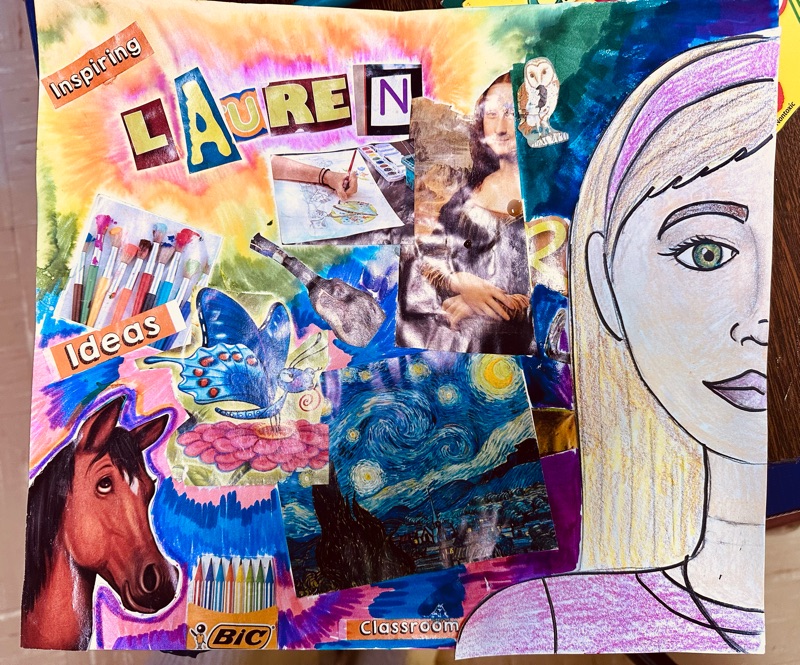
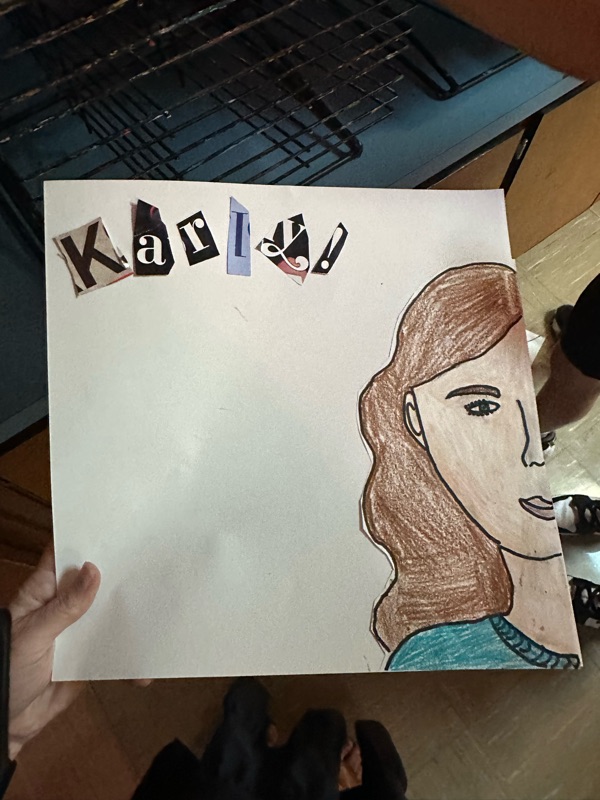
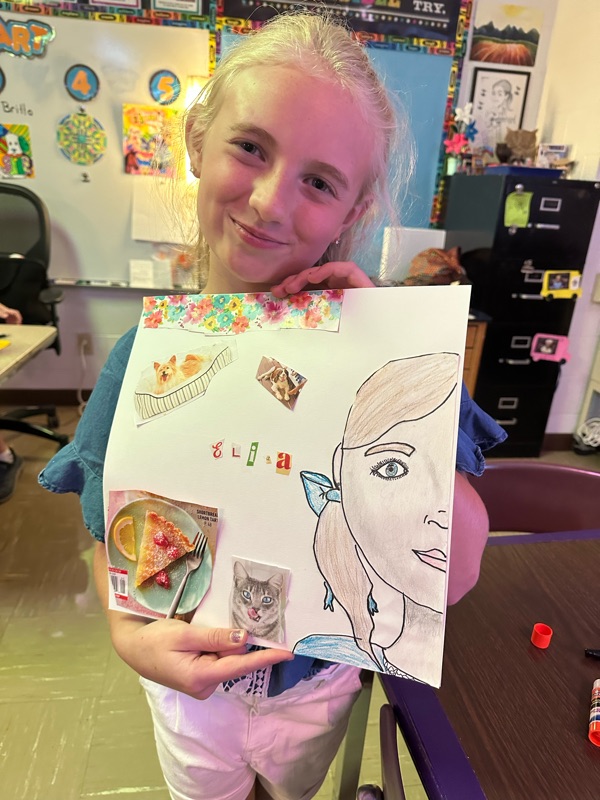
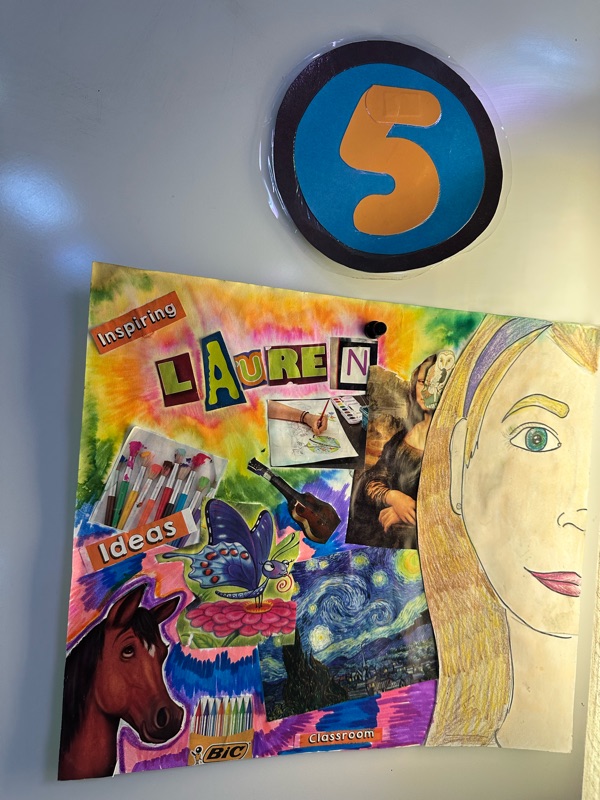
3rd Grade "I Am an Artist Portraits"


3rd grade is finishing up their "I am an Artist" portraits, and they're looking so great! This lesson is from Keisha Casiano and can be found here on her TPT account

Here's their fabulous work! 

Monday, November 24, 2025

Kindergarten Mondrian Collages


Kindergarten is learning about Piet Mondrian and making a shape collage of primary colors and lines. This is a one day, 45 min project that they enjoyed doing! 
I showed them The Primary Colors video, and showed examples of Mondrian’s art, and then demonstrated how to assemble their collage. 
I used my favorite construction paper, and cut it up into shapes and strips for them. 
Then, I demonstrated using the glue stick and making sure we put the glue on the shape and not all over our white paper! 
They did a great job following directions and making their project their own! 
Here’s some great examples!

Monday, November 10, 2025

2nd grade Fall Owl Collage


🦉 Fall Owl Art Project – Exploring Warm Colors & Texture! 🍁

This week in the art room, our young artists created adorable fall owls perched on colorful autumn branches, inspired by an Instagram post by @sv.artroom. This project allowed students to experiment with paint, learn art vocabulary, and practice cutting and assembling shapes.


Materials

Jack Richeson paint, My favorite paintbrushes, fave pencils, oil pastels, 90lb paper, scissors, and glue


Day 1: Warm Colors + Painting the Background

We began by talking about warm colors—red, orange, and yellow—and how they remind us of fall leaves and cozy autumn weather. Students used paint to create a tree trunk with branches and added dabs of warm color to represent leaves in the background.

We also discussed texture and how artists can make surfaces look rough, smooth, fuzzy, or patterned. Students painted a separate sheet of brown paper with layered brushstrokes to create a feathery texture for the owl’s body. This was a great way to explore how paint can be used to make patterns and movement.


Day 2: Building the Owl

On the second day, students transformed their painted papers into an owl. They cut out the body from their textured brown paper and glued it onto the background. Then we created the owl’s:

  • Big round eyes (because owls are excellent nighttime observers!)

  • Tiny orange beak

  • Triangle-shaped feet

Students practiced cutting circles, triangles, and curves—wonderful fine motor skills disguised as creative fun. They used shape tracers from amazon and I made owl tracers for them. 


What We Learned

✅ Warm vs. cool colors
✅ How to create texture with paint
✅ Cutting & gluing skills
✅ Following multi-step directions
✅ That art can be built in layers—just like real artists do!


The Finished Result

Each owl turned out full of personality—some are curious, some are silly, and some look very wise. No two owls are the same, and that’s what makes art amazing!

🦉🍂 We are so proud of our young artists and their colorful fall owls. Stay tuned for more creative adventures in the art room!